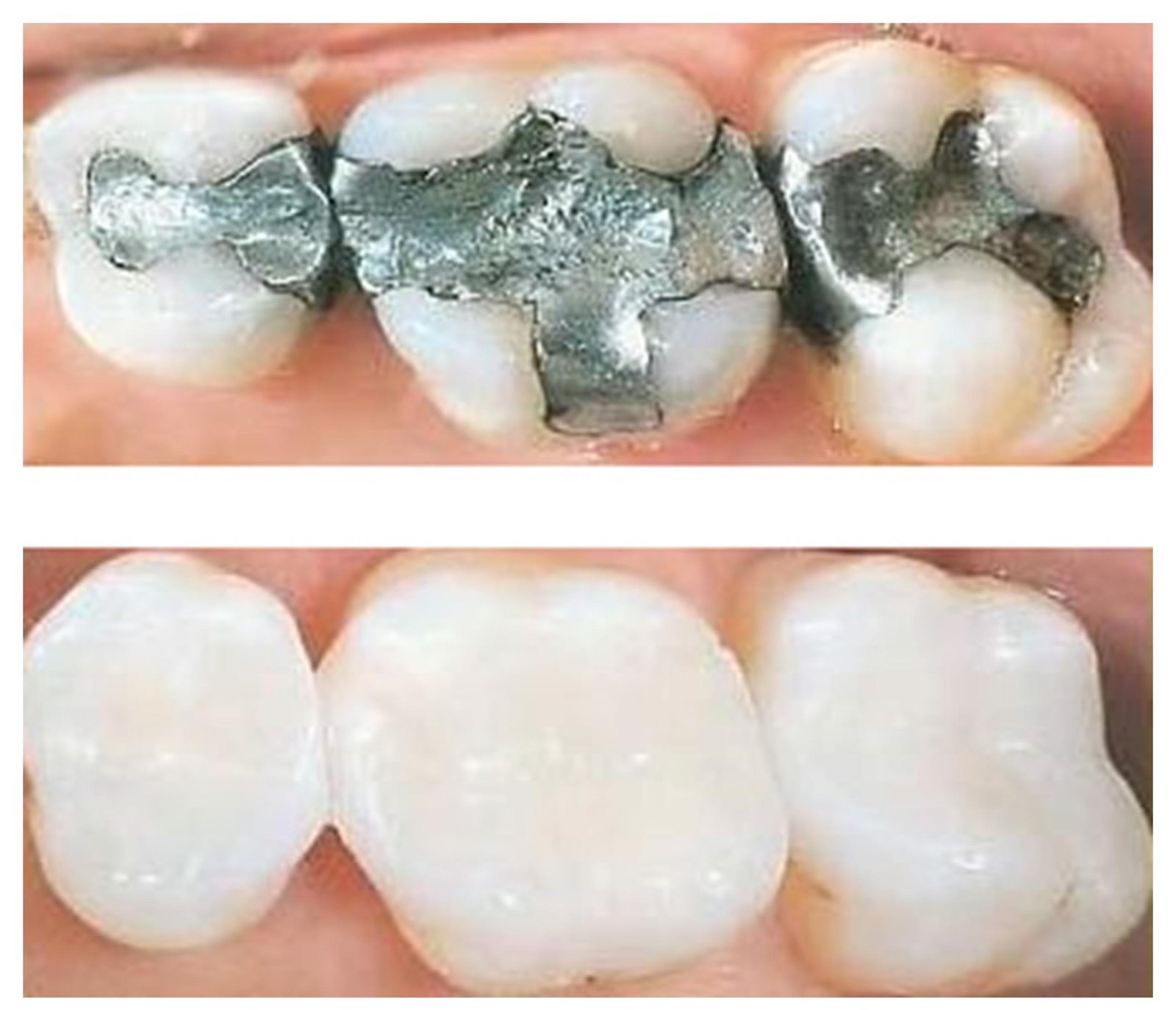
Tooth-Colored Filling
01The Makeup of a Tooth
The external part of the tooth is called the enamel, which is arguably the hardest natural material produced by animals. The inner part of a tooth is the dentin. Today’s dental composite resins mimic natural dentin and are commonly used in non-amalgam fillings. These composites are made of a plastic resin and silica filler.
02Bonding
Metallic fillings or amalgams could not bond with the tooth; they merely rested on it and provided a degree of protection. Today, much more is known about the interface between dentin and enamel and the bond created between these two natural products. This has led science to discover new ways of bonding fillings to teeth to create a stronger, more protected connection and also more comfortable fillings.
03Rebuilding Teeth
Restoring teeth, or literally rebuilding them successfully, depends on a good bond between resin materials and both the enamel and dentin. Restorative dentistry recreates a tooth that not only looks natural but responds naturally too, allowing bite stress to pass through the tooth while receiving biting force.
04Using Nature as a Guide
In the past, dentistry focused on creating "stronger" teeth by using very durable, rigid materials to replace decayed or damaged teeth. These rigid materials actually contributed to further decay by allowing additional decay and cracking to occur. Today, dentistry uses nature as a guide by constantly looking for materials that more closely mimic teeth in form and function. It is a combination of art and science that takes into account the action of the tooth being restored and its internal shape. A tooth, or portion of a tooth, is then recreated using materials that respond as a healthy tooth would.
05Immediate Dentin Sealing
Immediate dentin sealing uses a resin coating to seal and protect the dentin surface from bacteria and sensitivity. It also creates a hybrid layer to which composite resin can be bonded for shaping into a tooth structure.
06Dentin Build-Up
This is simply the layering of resin to fill any voids and recreate the original tooth's shape. One problem with metal or amalgam fillings is that they need undercuts to hold them in place. The use of undercutting removes some of the healthy tooth and can lead to weakening and future cracks. Resin dentin build-ups don't have this problem.
07Direct, Semi-Direct or Indirect Restorations
Direct, semi-direct, or indirect are three different methods to repair teeth with restorative materials or fillings. Each method has its own benefits and drawbacks and is best suited for a specific set of circumstances.
08Direct Fillings
Direct fillings require small amounts of restorative materials to be placed into cavities resulting from decay. The resin is applied in layers which are instantly set with special lights, meaning the entire filling can be built up and repaired by the time you leave the office.
09Semi-Direct Fillings
Semi-Direct fillings are for repairing larger areas. These are similar to direct fillings, in that layers of resin are used, but this restoration can be removed and is set outside of the mouth. Once the filling has set, it is then bonded to the tooth. Semi-Direct fillings can also use CAD/CAM (computer-aided design and computer-aided manufacturing) to create the inlays. This technology allows your dental professional to make a harder, more durable porcelain restoration without having to send out a mold to a remote fabrication facility.
10Indirect Fillings
Indirect fillings are used when a very large or complex restoration is required. Basically, when there is not enough healthy tooth left to fill, a restoration is created to replace most of the visible tooth, or to crown it. These are more involved procedures and cannot be fabricated directly on the tooth and cannot be placed the same day.